What this document is
A single-page action instrument: the one thing each council is asked to authorise, and why the lead time makes it worth starting now.
- The 11 councils produce 500,832 tonnes of residual a year. Four 400 TPD units, one added a year, take all of it by Year 4.
- Each council pays £111.81/t and receives a Circular Royalty™ of £134.17/t in Year 1, rising one percentage point a year, uncapped, for a 30-year minimum term.
- One action per council: authorise an LOI/MOU and join a Joint Working Group, so the option is specified while current contracts run.
What recycling cannot reach is burned elsewhere or buried
Northern Ireland’s councils collected 1,010,410 tonnes of municipal waste in 2024/25 and recycled or composted about half of it. What remained, about 500,832 tonnes, went mainly to energy recovery, much of it shipped out as refuse-derived fuel: about 302,000 tonnes left Northern Ireland in 2025, most through Warrenpoint. Two landfills still take household material, and every landfilled tonne carries £130.75 of Landfill Tax, rising to £136.70 in April 2027.
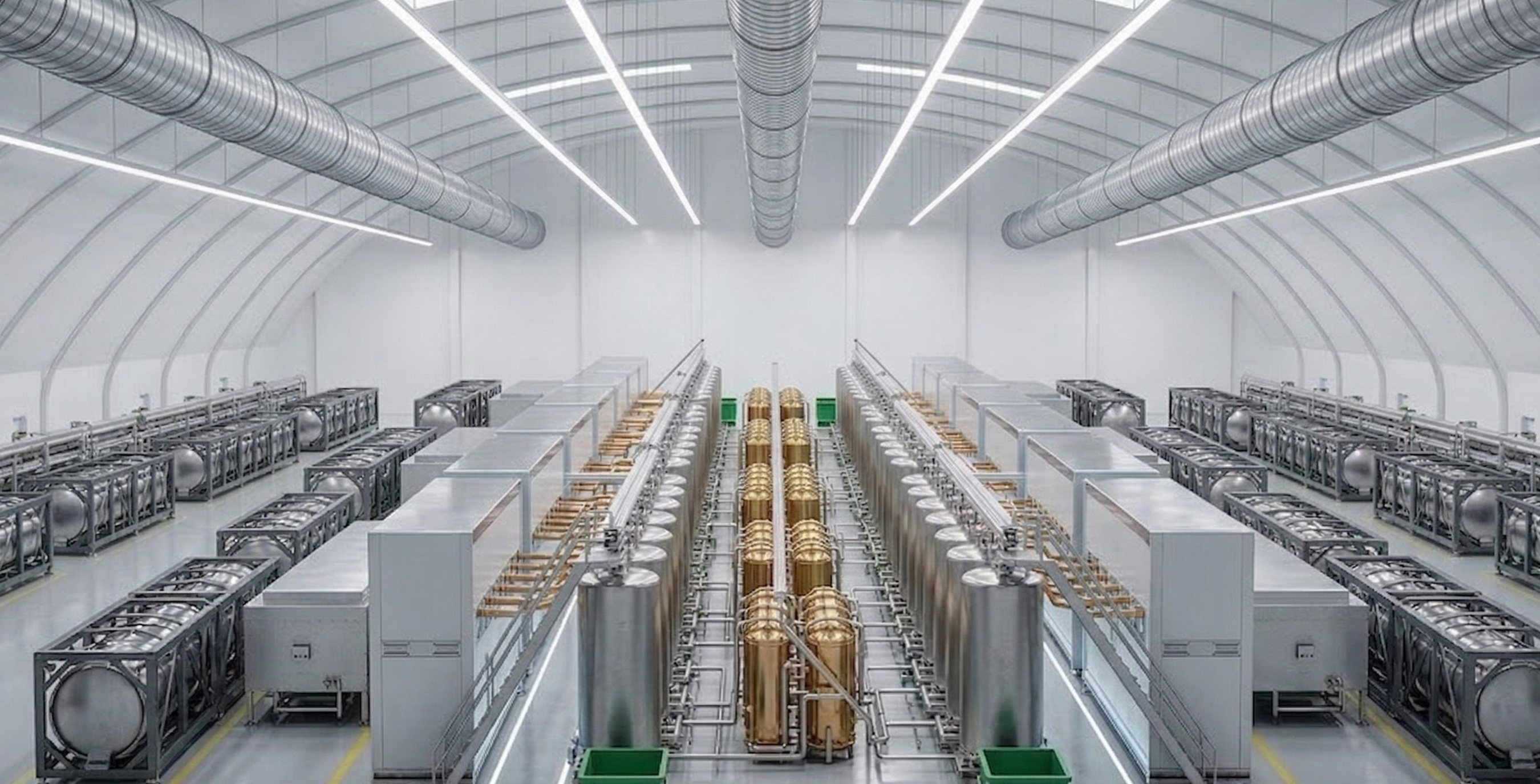
Carbotura was built for the part of the stream that recycling cannot finish. Advanced Circular Manufacturing (ACM) takes delivered residual and converts it into specification-grade manufactured products — synthetic graphite, graphene compounds, recovered metals and minerals, and net-positive ultrapure water. It is a manufacturing operation, not incineration, not energy from waste, not pyrolysis and not gasification. No oxygen enters the process, so nothing burns; there is no stack and no ash, and Carbotura does not sell power, electricity or hydrogen.
The fee is US$150 a tonne, £111.81 at today’s rate. That is below Landfill Tax alone (£130.75) and inside the £100–130 range the UK market quotes for energy-from-waste gate fees, before any export haulage. We do not claim a saving against any council’s contract, because no council publishes its residual price per tonne. We show the published benchmarks and leave each council to set its own figure beside them.
What each council receives is separate. Beginning 13 months after Carbotura’s receipt of that council’s first Beneficiation Fee payment, Carbotura pays it a Circular Royalty™ of £134.17 a tonne in Year 1, rising one percentage point every year, uncapped, for a 30-year minimum term. The fee and the royalty are two independent transactions, reported separately and in full, and never netted. Each council signs its own agreement and receives its own royalty on its own tonnes.
Why Northern Ireland, and why now
About 302,000 tonnes were exported in 2025, more than 80% through Warrenpoint. A destination on the M1 keeps the material, the jobs and the royalty at home.
Craigavon sits within about 75 km in a straight line of every council’s centre, on the M1/A3 corridor that links Belfast, Newry, Dungannon and the west.
Each council keeps control of its own stream, its own fee and its own royalty. arc21, the North West group and the three independent councils procure as they do today.
Staging over four years lets each council join as its current residual contract comes up, and the proposal takes no position on the Hightown application.
Each 400 TPD unit is 12 to 24 months from permit issuance to Commercial Operation, because ACM modules are manufactured and replicated rather than custom-built on site.
The structure, stated once
The Beneficiation Fee and the Circular Royalty™ are independent gross transactions with different payers. They are reported separately and never netted against one another.
The same physical mass is counted once in each of three dimensions — asset, revenue, attributes — and never summed as three independent masses.
Carbotura finances, owns and operates the facility, funding 100% of capital at every phase. The counterparty commits feedstock, not money.
One Circular Supply Agreement
+ Circular Royalty™
- Beneficiation Fee: £111.81/t (US$150) · set at Term Sheet against the verified FWDC · 2.5%/yr escalator
- Circular Royalty™: 120% of the current-year Beneficiation Fee in Year 1 (£134.17/t, Year 1), +1pp/yr, uncapped
- Royalty commencement: 13 months after the first Beneficiation Fee payment, rolling monthly on delivered tonnage
- Perpetual CSA, 30-year minimum term · Carbotura-financed, owned and operated · zero counterparty capital
- Feedstock transfers under the CSA — ownership and liability pass at collection or delivery
- Accounting basis: CIPFA Code of Practice on Local Authority Accounting (IFRS-based)
Carbotura is a development-stage company. No Carbotura facility is at or past Commercial Operation Date anywhere in the world. The first-of-a-kind plant is in Pennsylvania, USA, under a signed 30-year Circular Supply Agreement with York County; it is in deployment now, with commercial operation targeted for late 2027 to early 2028.
We have not asked any counterparty to take that on trust. Each CSA carries a condition precedent: an operating facility meeting our stated claims and standards. Until that condition is satisfied, the council is not held to performance.
For Northern Ireland the practical point is that the first plant will be operating before any council has to decide.
Key figures at a glance
Circular Royalty™ projections by phase
Beneficiation Fee and Circular Royalty™ shown independently per the Separate Transaction Principle. No figure on this page nets one against the other.
| Capacity | Annual TPY | Beneficiation Fee · Year 1 | Circular Royalty™ · Year 1 basis | 30-Year Gross Royalty | Direct FTE |
|---|---|---|---|---|---|
| 400 TPD Phase 1 | 146,000 | £16.3M | £19.6M | — ESTIMATED | ~100 |
| 800 TPD Phase 2 | 292,000 | £32.6M | £39.2M | — ESTIMATED | ~200 |
| 1,200 TPD Phase 3 | 438,000 | £49.0M | £58.8M | — ESTIMATED | ~300 |
| 1,600 TPD ← full capacity Phase 4 | 500,832 | £56.0M | £67.2M | ~£3.27B programme ESTIMATED | ~400 |
Each row prices that stage’s delivered tonnage at Year 1 rates: Beneficiation Fee £111.81/t (US$150 at the Bank of England rate of 2 November 2026 (£1 = US$1.3416)), Circular Royalty™ £134.17/t (120% of the fee). In the programme itself the rates escalate each year (see the Economic Impact Report). The two are independent gross transactions, paid and received by each council on its own tonnes, and never netted. Figures ILLUSTRATIVE until Term Sheet execution.